
Insight
How do I get off the Cook County Brady/Giglio list?
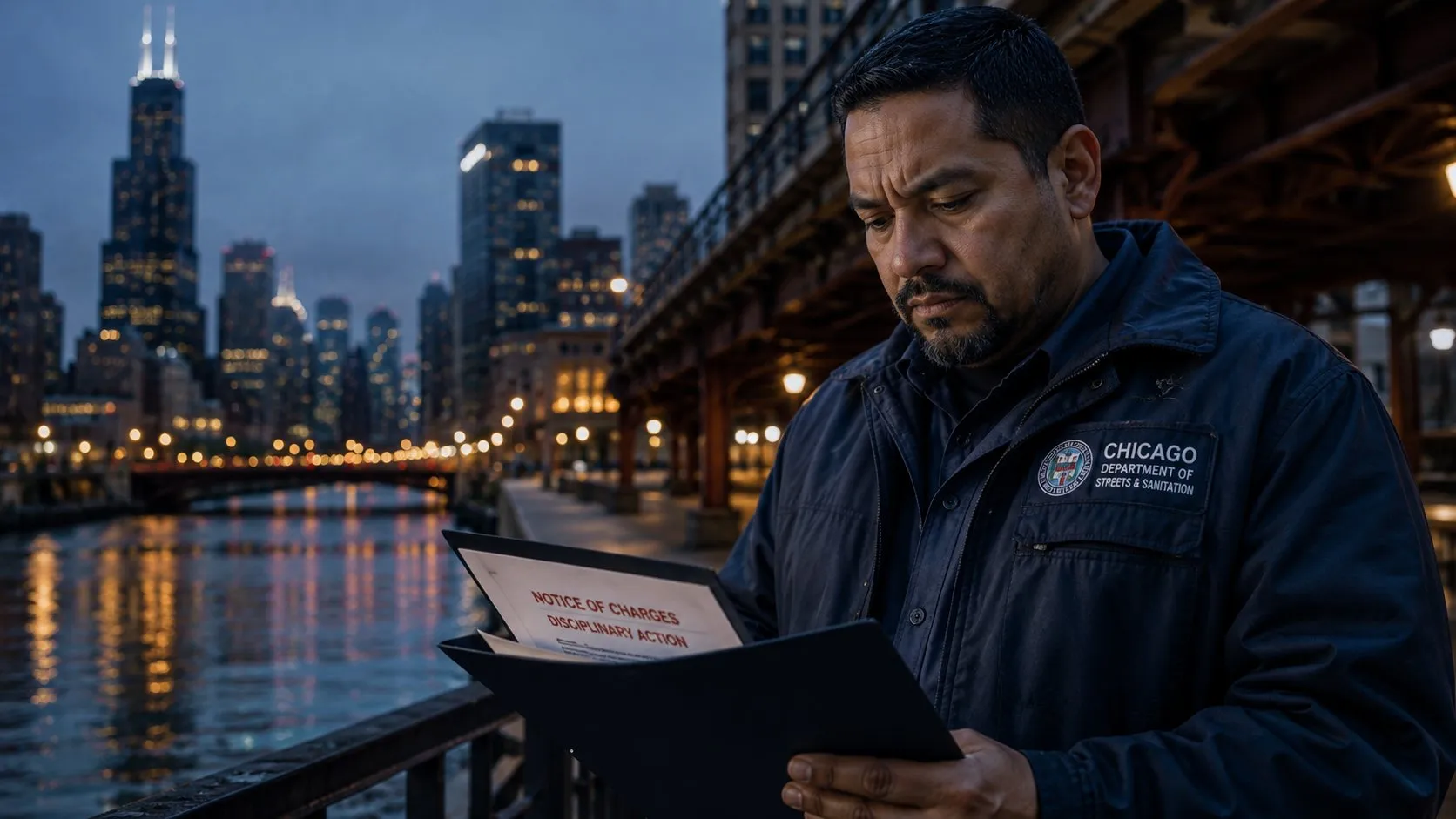
Short answer: Usually by fixing whatever put you there. Under current Cook County State's Attorney policy, the do-not-call list is limited to officers stripped of police powers, so getting powers restored, or getting the underlying finding reversed, is the main route. Ask the office for review with documents, and pull your own records through FOIA.
Some of what circulates in roll call is out of date. Cook County changed its system in 2025, and plenty of officers are still describing the old one.
Why do prosecutors keep these lists at all?
It comes from two Supreme Court decisions. The prosecution has to turn over evidence favorable to the accused when it's material to guilt or punishment, Brady v. Maryland, 373 U.S. 83 (1963), and that duty covers evidence that would impeach a prosecution witness's credibility, Giglio v. United States, 405 U.S. 150 (1972). Police officers are prosecution witnesses. So a sustained finding that an officer lied, filed a false report, or was convicted of a crime of dishonesty is something the defense may be entitled to know about.
The list is how a prosecutor's office tracks that. It isn't discipline, and it isn't a court finding.
What does the Cook County list look like now?
Under former State's Attorney Kim Foxx, the office ran two lists under a Brady/Giglio policy effective July 2023. The do-not-call list was public (174 names when it was released in July 2023). A separate internal disclosure list flagged officers with impeachment material that had to be turned over. That 2023 policy told the office to notify officers through their employer, and gave them 90 days to send a letter with supporting documents asking the Brady Committee to remove them.
State's Attorney Eileen O'Neill Burke took office in December 2024 and discontinued both lists in that form in early 2025. Her policy chief told the Chicago Reader that the old system had no guidelines for how people got on the list and no way off for those put there in error, though, as the Reader and the Chicago Bar Association noted, the 2023 policy did have the 90-day removal process described above. What replaced it, as reported by the Chicago Reader, the Chicago Bar Association and Chicago Appleseed:
- a shorter internal do-not-call list limited to officers who have been stripped of police powers
- a standardized Brady/Giglio questionnaire that asks officers to disclose their own misconduct and credibility issues
That matters for you. If you're on the current do-not-call list, the most likely reason is that your department took your powers during a pending investigation or discipline case. In August 2026 the Chicago Tribune reported that prosecutors had disqualified dozens of current CPD officers from testifying while their discipline cases sit unresolved, including officers whose termination cases are on hold pending the Illinois Supreme Court's ruling on whether serious CPD discipline goes to arbitration or the Police Board. The court heard argument in that dispute on September 24, 2026 (Chicago John Dineen Lodge #7 v. City of Chicago, No. 132241).
The office has not published its revised policy, so we can't confirm whether it keeps the 2023 policy's written notice through your employer or its 90-day review letter. What the office has said publicly comes from a spokesperson quoted by the Chicago Tribune in August 2026: officers who believe they were put on the list in error can ask to be removed, and officers are removed once their police powers are restored.
What does placement do to a career?
You stop being useful as a witness, and in a lot of assignments that's the job. Expect to come off cases, lose eligibility for units that make arrests or sign warrants, and get passed over. The Seventh Circuit has seen this exact pattern. A Cook County Sheriff's corrections officer was told he couldn't be promoted because he was on the Sheriff's Office's own Brady list, in Sandefur v. Dart, 979 F.3d 1145 (7th Cir. 2020).
Some departments try to fire over it. That's not automatic. A Kane County officer was terminated after the Kane County State's Attorney said it would no longer want to call him, and an arbitrator reinstated him because the prosecutor hadn't barred him from testifying and he could still do the job. The appellate court confirmed the award. It found no well-defined Illinois public policy against reinstating officers found untruthful, and held that on those facts reinstatement did not violate the policy requiring police honesty, in Village of Hampshire v. Illinois Fraternal Order of Police Labor Council, 2026 IL App (2d) 250080.
Hiring is where it follows you. Background investigators ask about Brady status directly. And the conduct behind a placement, especially a sustained untruthfulness finding, can matter to the Illinois Law Enforcement Training and Standards Board under 50 ILCS 705/6.3. Our article on contesting ILETSB decertification covers that process.
What are the realistic ways off?
Kill the underlying finding. This is the strongest route by a wide margin. If the entry rests on a COPA or BIA finding, fight it at the Police Board, in arbitration, or on administrative review. Under the 2023 policy, a placement based on a finding by a judge or an administrative body required an order overturning that finding. Once your powers are restored or the finding is reversed or not sustained, you have something concrete to put in front of the State's Attorney.
Ask the office for review, in writing, with documents. Send the final disposition, the award, the restoration-of-powers order, whatever changed. Under the 2023 policy, more than 30 officers appealed and some got off the do-not-call list, according to the Chicago Reader and the Chicago Bar Association. The current office has not published its process, but, as noted above, its spokesperson has said officers listed in error can ask to be removed and that restored powers mean removal. Nobody can promise the office will act, and the timeline is its call.
Use every review process offered to you. The officer in Sandefur lost his due process claim largely because his disqualification letters offered review within seven days and he never asked for it. The court assumed without deciding that placement could affect a protected interest and still ruled against him. (It also found no county policy or custom that could make the Sheriff's Office liable.) If anyone gives you a window, use it.
Be careful with the questionnaire. Answer it accurately and completely, because an incomplete answer becomes its own honesty problem. These forms aren't private. In December 2025 the Illinois Attorney General's Public Access Counselor ordered the office to release completed questionnaires with officer names unredacted (Binding Opinion 25-015).
Litigation, with honest expectations. No Illinois or Seventh Circuit decision we've found recognizes a right to force a prosecutor to take you off a list. Prosecutors are absolutely immune for filing Brady/Giglio disclosures in criminal cases. That immunity has limits, though. The Seventh Circuit has held that it does not cover blanket disclosures sent to a bar association or to current or prospective employers when they aren't tied to pending or contemplated charges (Martin v. Goldsmith, No. 23-2277 (7th Cir. Dec. 31, 2025)). Claims against your employer are often more workable: just-cause arbitration if you're disciplined or fired, a stigma-plus due process claim under § 1983 if the department publicly brands you a liar and takes your job, and possibly defamation. Deadlines are short. Defamation in Illinois is one year.
Can I get my own records?
Yes, and you should, early. File a FOIA request under 5 ILCS 140 with the State's Attorney for any record identifying you on a Brady/Giglio list, your questionnaire, and any correspondence about you. Request your COPA or BIA file and your personnel file from your department. The Personnel Record Review Act, 820 ILCS 40, gives employees a separate right to inspect their personnel file. You can't challenge a placement you can't see.
Is Cook County the only list I need to worry about?
No. Every State's Attorney sets its own practice. Kane County's letter in the Hampshire case is an example of a collar county acting on its own. The Cook County Sheriff's Office has kept its own list too. Clearing one office doesn't clear another.
If you've been put on a list or told you can't testify, call GB Law at (312) 248-3303 to talk through your options. More on how we handle these matters is on our Brady/Giglio list page.
Attorney Advertising. This article is general information, not legal advice, and does not create an attorney-client relationship. GB Law, 1821 W Hubbard St, Suite 209, Chicago, IL 60622, (312) 248-3303.
Questions people ask
Will I be told if I'm on the list?
Under the 2023 policy, notice went through your employer with the reason. The office has not published its revised policy, so we can't say whether it still requires notice. According to a spokesperson quoted by the Chicago Tribune in August 2026, officers who believe they were listed in error can ask to be removed. Many officers learn when a case gets pulled or powers are taken.
If COPA's finding is reversed, am I automatically off?
Don't assume it. Send the reversal to the State's Attorney and ask for written confirmation.
Can my department fire me just for being on a Brady list?
It depends on your contract and the facts. An Illinois appellate court upheld reinstatement of an officer terminated after a prosecutor said it wouldn't call him.
Does the list follow me if I apply to another agency?
Often, yes. Hiring agencies ask about Brady status, and each county prosecutor decides for itself whether to call you.
Speak with an attorney
If any of this sounds like your situation, the first conversation is free and confidential. You will leave knowing the next step.
Call (312) 248-3303This article is attorney advertising and general information only. It is not legal advice, and reading it or contacting GB Law does not create an attorney-client relationship. Deadlines and outcomes depend on the specific facts of each matter. Speak with an attorney promptly so a deadline does not decide your case for you.