
Insight
What are my rights in a Garrity interview in Illinois?
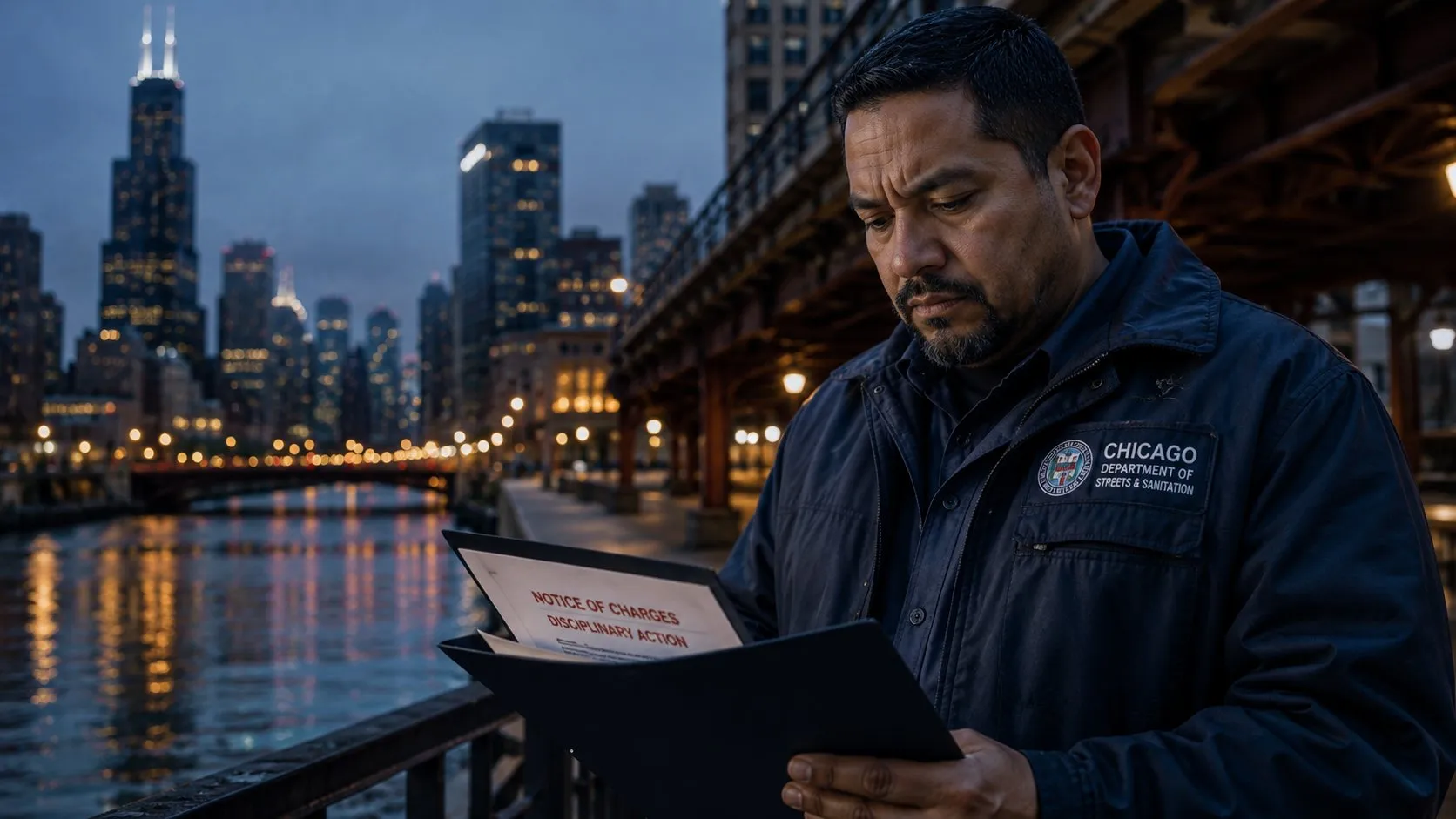
Short answer: If you're ordered to answer questions under threat of discipline, what you say can't be used against you in a criminal case. It can still be used to discipline or fire you. Illinois law also gives you written notice of the investigation, the right to a lawyer, a complete record of the interview and limits on how it's run.
What does Garrity actually protect?
One thing, and it's narrower than most officers think.
When the government forces you to choose between answering questions and losing your job, the answers you give are coerced. A prosecutor can't use them against you in a criminal case (Garrity v. New Jersey, 385 U.S. 493 (1967)). That's the whole protection.
The other side of the deal matters just as much. As the Supreme Court explained, a department can fire an officer who refuses to answer questions narrowly tied to the job, as long as it doesn't demand that the officer give up the constitutional privilege (Gardner v. Broderick, 392 U.S. 273, 278 (1968)). Once you've been properly ordered to answer and told the answers can't be used criminally, silence usually isn't a safe option. Refusing can become its own charge.
Is this interview compelled or voluntary?
Find out before you say a word.
A compelled interview is one where you're ordered to answer and told that refusing will lead to discipline. That's where Garrity applies. If nobody has ordered you to answer and you talk anyway, you may have no Garrity protection at all. Those statements can end up in a criminal file. Sometimes the paperwork is vague, or an investigator asks you to "just clear something up" in the hallway. Don't guess. Ask on the record whether you're being ordered to answer and whether refusing will result in discipline. If the answer is yes, you want that in the recording.
What rights does Illinois law give me?
The Uniform Peace Officers' Disciplinary Act, 50 ILCS 725, covers officers employed by a unit of local government or a State college or university when they're questioned in a formal investigation that could lead to suspension of more than 3 days, removal or discharge (50 ILCS 725/2(a), (c), (d)). Informal inquiries and minor infractions are excluded (§ 2(d)). When the Act applies, the interrogation has to follow §§ 3.1 through 3.11 (§ 3).
- Location. At the facility where the investigator is assigned, or the precinct or police facility with jurisdiction over where the incident allegedly happened (§ 3.1).
- Written notice of the investigation. You have to be told in writing about the nature of the investigation, in enough detail to reasonably apprise you of it (§ 3.2).
- Timing. A reasonable time of day, and during your duty hours when the nature of the incident and operational needs allow (§ 3.3).
- Who's in the room. You're told in writing who the interrogators are and everyone present for the employer. You tell the employer who will be there for you (§ 3.4).
- Length and breaks. Sessions have to be of reasonable duration, with reasonable time for rest and personal necessities. The statute sets no hour limit (§ 3.5).
- Conduct. No professional or personal abuse, including offensive language (§ 3.6).
- Record. A complete record of the interrogation must be made, and you get a complete transcript or copy without charge and without undue delay. It may be electronically recorded (§ 3.7).
- Written warnings. Before questioning, you must be told in writing that admissions can be used as evidence of misconduct or as the basis for charges seeking suspension, removal or discharge, and that you have the right to counsel of your choosing at any stage (§ 3.8(a)).
- Counsel and union rep. You can ask for a lawyer before or during questioning. Once you ask, questioning can't go forward until you've had reasonable time and opportunity to get one. If your collective bargaining agreement requires a union representative during investigations, that person must be present unless you waive it (§ 3.9).
- Consequence for violations. Admissions obtained in an interrogation that didn't follow the Act can't be used in a later disciplinary proceeding against you (§ 3.10).
- Polygraphs. You can't be required to take a polygraph or chemical-substance questioning without your express written consent. Refusing can't lead to discipline or go in your record (§ 3.11).
Two more points. The Act bars retaliation, including threats, against an officer for exercising these rights (§ 7). And it does not apply to an officer charged with violating a criminal law (§ 5). If criminal charges have been filed, the analysis changes, and you need a lawyer before any interview.
Firefighters have a parallel statute, the Firemen's Disciplinary Act, 50 ILCS 745, with its own version of these protections.
Anything different for Chicago officers?
Yes. A separate statute covers classified civil service police officers in municipalities over 500,000 people, which in Illinois means Chicago. Before an interrogation that could support charges seeking removal or discharge, you must be told in writing what specific improper or illegal act you're accused of, that your admissions may be used as the basis for those charges, and that you can have counsel of your choosing present. A complete record must be made, and you get a transcript without charge and without delay (65 ILCS 5/10-1-18.1).
Note the wording. The phrase "specific improper or illegal act" is more precise than the general "nature of the investigation" standard in § 3.2. If your notice is vague, raise it before the interview starts.
In Chicago, these interviews usually come from COPA or BIA. Your collective bargaining agreement may add procedural rights on top of the statutes. Read the investigation article of your contract, or have someone read it with you, before you walk in.
What should I do before the interview?
Call a lawyer the day the notice arrives. Not the night before.
Read the notice line by line. Pull together what you can lawfully access: your reports, your body-worn camera footage if you're allowed to review it, your notes, your timeline. Don't discuss the incident with other involved officers. That can later look like coordinating a story.
Get enough sleep. It sounds small. It isn't.
What should I do during the interview?
Confirm on the record that you're being ordered to answer under threat of discipline, and that your statement is compelled. Make sure the written warnings under § 3.8(a) were given before any questions.
Then answer the question asked. Only that one. If you don't know, say so. If you don't remember, say so. Don't guess at times, distances or what someone else was thinking. If a question is unclear, ask for it to be rephrased.
You can ask for a break. The Act entitles you to reasonable ones (§ 3.5). Use them to talk with your lawyer or rep when something goes sideways.
Can a Garrity statement still hurt me?
Yes. This is where officers get burned.
The Garrity rule keeps your compelled answers out of a criminal prosecution for the conduct under investigation. It does nothing for you inside the department. The same answers can support discipline up to termination.
Lying creates a second problem. The Supreme Court held that a federal agency could discipline employees for false statements in an investigation, even a false denial of the underlying charge, and the same logic applies to public employers generally (LaChance v. Erickson, 522 U.S. 262 (1998)). The Garrity protection doesn't immunize the lie either. Courts have allowed obstruction prosecutions built on false statements in compelled interviews (United States v. Veal, 153 F.3d 1233 (11th Cir. 1998)).
A false-statement finding can also follow you. It can affect your certification with the Illinois Law Enforcement Training and Standards Board and your Brady/Giglio status.
The original allegation may be minor. A shaded answer about it may not be.
What happens after?
Ask for your transcript or recording under § 3.7, and review it with your lawyer. Write down anything that didn't follow the Act while it's fresh: late notice, missing written warnings, questioning after you asked for counsel. Those details can matter under § 3.10 if charges come.
Then watch the calendar. Grievance windows under a CBA can be short, and review deadlines after a final Police Board or merit board decision run fast.
If you've received a notice to appear, call GB Law at (312) 248-3303 before the interview date. More on how we handle these matters is on our police officer discipline page.
Attorney Advertising. This article is general information, not legal advice, and does not create an attorney-client relationship. GB Law, 1821 W Hubbard St, Suite 209, Chicago, IL 60622, (312) 248-3303.
Questions people ask
Can I refuse to answer in a Garrity interview?
If you've been ordered to answer questions about your job and haven't been asked to waive your constitutional privilege, refusing can itself lead to discipline, including termination. Talk to a lawyer before deciding.
Can my Garrity statement be used against me in discipline?
Yes. The Garrity rule only bars use in a criminal prosecution. Illinois law requires the department to warn you in writing that your admissions may be used for charges seeking suspension, removal or discharge (50 ILCS 725/3.8(a)).
Do I have the right to a lawyer in my interview?
Yes. Under 50 ILCS 725/3.9, you can have counsel of your choosing and may request counsel before or during questioning. Once you ask, questioning stops until you've had reasonable time and opportunity to get one.
Do I get a copy of my interview?
Yes. A complete record has to be made, and you're entitled to a complete transcript or copy without charge and without undue delay (50 ILCS 725/3.7).
Speak with an attorney
If any of this sounds like your situation, the first conversation is free and confidential. You will leave knowing the next step.
Call (312) 248-3303This article is attorney advertising and general information only. It is not legal advice, and reading it or contacting GB Law does not create an attorney-client relationship. Deadlines and outcomes depend on the specific facts of each matter. Speak with an attorney promptly so a deadline does not decide your case for you.